
What is a Venture Partner?

One of my students just asked me what a “Venture Partner” is in the context of a venture capital firm.  I quickly typed in “venture partner” into the Wikipedia query box.  No results.  Kind of surprised me.  So, then I typed “venture partner definition” into the Google search box.  Lousy results.  So, I had to wing it.

Here is my take to this not so uncommon question.

First, to make sure we are on the same playing field……many VC firms have hierarchies (particularly the large ones).  Examples:

1.  Managing Partner/General Partner (I have seen some with Managing Directors too like an investment bank):  top dogs that run the shop and own most of the carried interest.

2.  Principals:  next in line to the top.  Typically folks that have been at the firm for a good chunk of years and are learning all about the business (fund raising, investing, managing investments, managing investors, harvesting).

3.  Vice Presidents:  below Principals.

4.  Associates (sometime there are senior associates too):  below the VPs; the new folks on the block, typically young in age.

5.  Other staff like a controller or CFO; marketing coordinator; investor relations manager; and general counsel.  Again, all these roles are dependent on the size of the firm and amount of capital under management.

Critically, it is completely common for someone to be hired in as a principal or managing partner depending on the experience level.

Also, critically, some firms only have the tops dogs and a few principals.  There is no one right way to cut the biscuit when it comes to VC titles.

Then there are the ambiguous titles of Executive in Residence and Entrepreneur in Residence.  These typically are people paid by the VC firm to spend time at the firm and perhaps create a company while being incubated by the VC or be available to join a new portfolio company that the VC invests in.  These roles typically do not have any carried interest.

So, now to Venture Partner (I have also seen Venture Advisers).  It has lots of flexibility and ambiguity.  It might be a former General Partner who wants to step back from the day to day running of the firm and thereby avoid doing things that are not particularly pleasant  all the time (like fund raising or sitting on way too many boards or managing limited partners).  It might be a real tech wizard that the VC firm wants to keep around to help vet deals and companies.  It might be a real ops wizard that can parachute in and fix things.   So, it is a nice catch-all category.  It carries cache.  And it often carries carried interest too (though a lower share).

Hope that answers some questions!
 

Being Part of a Team

I have been doing a lot of thinking lately about the desire to be part of a team.  Let’s call this “Team Desire”.   Some people have it.  Some people don’t.  Some VCs have it and some don’t.  Some have it more than others.   I would think that all CEOs have it, and if they don’t they should consider switching titles.

Being part of a team…….hmmmm.   Do those that have Team Desire have some need to feel included?  Maybe.  Do those that have Team Desire have some need to be recognized?  Maybe.  Do those that have Team Desire have a need to feel reassured?  Maybe.   On these 3 questions, my general thought is “who cares.”  These are not overly healthy aspects of Team Desire, but I am sure they exist often.

I have Team Desire.  This applies to my role as a VC and in many other aspects of my life (like my soccer team or my group of skiing buddies).  In my VC role, there are at times conflicts between being on the company team and, well, being a VC.  Some CEOs see those conflicts as apparent too often (in my view) and some don’t.  Some VCs might see those conflicts as apparent too often and others surely don’t.  When things at a company are not going so well, the conflicts are more apparent.

Personally, I get over the real conflicts and apparent conflicts by knowing that certain rules of the VC dynamic are not changeable and not worth arguing about too much.  VCs fund companies.  Investors have lots of “say”.  VCs need to be treated like important shareholders and spoon fed constant information by the CEOs of portfolio companies.  VCs have board reps and the board controls the company.  Plain and simple rules.  I take these rules for granted.  Once I do that and hope that others on the team do also, then becoming part of the functioning team is pretty easy.  Team Desire wins.  It becomes easier to help and have the help accepted.  While the CEO cannot fire the VC from the board, the CEO can and should fire the VC from the inside team if the VC is not playing like a team member.  I think that most VCs actually want to play on the team for the right reasons and advance the cause dramatically.

At the companies in which I am involved, it is always about the team.  Earning trust from management and visa versa.  Working hard towards achieving goals and helping out in any way I can.  If a CEO considers this intrusive, then the team is not functioning right – either it is intrusive (and that needs correcting) or the perception is misguided (and that needs correcting).

I am sure that I will continue to think about this topic more and write more about it.  Team  Desire is the way my mind works.  Interesting topic – not that easy to write about.

2011 in review

This morning I woke up and did what I normally do – I picked up my DroidX and read my email.   And, in particular, I read Fred Wilson’s blog post.  Fred blogs every day (so does Brad Feld) and I like waking up to Fred to and Brad.  Yeah, sure, start the jokes….

Anyway, this morning’s post by Fred reviewed the stats from his blog for 2011.  Here is the post.   During 2011, Fred had 4.2 million views and 58,000 comments.  Wow.

So, you can imagine my big chuckle this morning when I continued to view my emails and found my year end review stats on my blog sitting in my inbox.  Hey, you got to start somewhere……5,900 views in 2011 :).  Like the WordPress stats geeks have reminded me, “A New York City subway train holds 1,200 people. This blog was viewed about 5,900 times in 2011. If it were a NYC subway train, it would take about 5 trips to carry that many people.”

Enjoy the full report, and remember, we all cannot be Fred……THANKS for your readership!  And Happy New Year!!

Click here to see the complete report.

No Mess (Too Much Liquidation Preference)

Nothing better than sitting at LGA writing blog posts.  Instead of heading for my meeting (does not start for a few hours), I  decided to hang out in the food court for a bit and watch. I know……living on the edge.

Continuing with the “No Mess” theme of commenting on things that give VCs pause, I thought it would be good to touch on liquidation preference.  Specifically, “too much” liquidation preference (I will use “LP” for liquidation preference).

As most of you probably know, LP is one of the fundamental economic attributes of preferred stock that preferred shareholders enjoy.  Yes, it is possible to issue preferred stock without liquidation preference, but that is rarely done.  Rather, preferred stock has the right upon a liquidation event to get its money back (a 1X LP) or, sometimes, a multiple of its money back (for example a 2X LP).  Sometimes, after getting back the LP, the preferred holder then converts to common and gets its prorata share of proceeds left after all LP has been paid (this is called participating preferred).  And sometimes the preferred stock holder has to choose between getting its LP only or converting to common and taking its overall prorata (this is called non-participating preferred; the holder will pick what ever route gives more $).  Current “market” stats actually show about 50% of deals being done with participating preferred and 50% with non-participating preferred.   One final background point, a “liquidation event” is a sale of the company and typically NOT an IPO.  All the liquidation preference provisions and rights are contained in the company’s certificate of incorporation as opposed to some independent written agreement.

Ok, enough of the background.  The “no mess” LP issue relates to investors in later rounds of financing (typically Series C and beyond).  Let’s assume the following:

Series A round = $3mm and the Series A preferred stock is participating with a 1X LP
Series B round = $5mm and the Series B preferred stock is participating with a 2x LP

So, after the Series B round the company would have $13mm of aggregate liquidation preference ($3mm plus 2*$5mm).  Fast forward 18 months after the Series B round and the company now needs to raise more VC $.  The company has been preforming well, but not over the top.  Yet, it is able to attract more investment capital.  Is the $13mm of aggregate LP a problem?  It might be.

With respect to the Series C round, let’s assume that the pre-money valuation is $12 million and that the VC investing is going to put in $4mm (and to keep things simple, let’s have only 1 Series C investor).  Therefore, the new Series C investor would own 25% of the company post money ($4mm/($12mm + $4mm)).  Let’s also assume that the Series C has a 1X LP with participation.

If all goes well, the company does not need to raise more $ prior to a liquidation event.  If it is later sold for $40 million, the proceeds waterfall focused on the Series C investor would look something like this:

$40 million
($100,000) of transaction expenses
 ($800,000) of investment banker fees assuming a banker is used
$39.1 million balance
($3 million) to Series A LP
($10 million) to Series B LP
($4 million) to Series C LP
$22.1 million balance to distribute to all shareholders prorata
($5.525 million) to Series C investor, which is 25% of $22.1 million
$16.575 million to Series A, B and common holders

In the above waterfall, it is NOT possible to calculate the specific distribution to Series A and Series B or common holders because I have not made any valuation assumptions for the Series A and B rounds so we don’t know how much of the company the Series A and B own.

Is the Series C holder happy with investing $4mm and getting back $9.525mm?  Better than a kick in the head and better than a loss, but a 2.38X return multiple is a good hit but not a home run.   Depending on the stage of the company, this might be OK.  In fact, it might be expected.

Had the Series B had only a 1X LP, the balance to distribute prorata to all shareholders would be $27.1mm and the Series C 25% portion of that would be $6.775 mm.  Then the total return back to the Series C investor would be $4mm plus $6.775mm = $10.775mm or a 2.69X return.  Healthy, but again not a home run.

Critically, as you lower the aggregate LP and also strip away the participation rights of earlier investors, the better off the last dollars in will fare (in this case the Series C).  In our example, the Series C investor, prior to investment, likely would have modeled out its potential return and reached a conclusion that “this investment does not have the potential to return enough to make it worth it unless we alter the rights of the existing investors.”  It may require a pay to play round that forced non-participants to convert to common (thereby lowering the aggregate LP) as an example.

Bottom line:  we weary of building up too much aggregate LP.  Things can get very ugly quickly.  Later investors will be turned off and it will result in some interesting negotiations.

Off to my meeting!


No Mess (Employment Agreements)

I thought it might be useful to start a blog series on stuff that VCs don’t like to see.  I know, some of you are laughing right now thinking “that will be an endless series…..”   I will pick random topics, but if you have any ideas, please let me know.

Today’s “No Mess” topic relates to restrictions on firing people.  Put simply, VCs like to see boards of directors that have maximum flexibility to terminate employees.  This relates to all levels of employees (not just senior execs).  Here are some examples of things that result in unattractive restrictions:

1.   Employment agreements:  if possible, avoid putting the phrase “employment agreements” and word “VCs” in the same sentence unless of course the sentence is “VCs really don’t like employment agreements.”   Employment agreements typically confer a severance payment to the employee (for example 3 months salary), and that means $ out the door (in other words an unattractive restriction).  Employment agreements, if they do exist, should always condition the payment of severance on the receipt of a written release from the employee and ideally an agreement not to compete as well.

2.  Employee handbooks that provide for severance:  I once ran into a situation where a startup company had an employee handbook (not all small startups have those, but this one had about 150 employees) that provided for 2 weeks severance upon termination for all employees.  Yikes.  Again, an unattractive restriction.  I know, I am sounding callous.

The general rule is that employees are “employees at-will”, which means that they can be fired any time (except for reasons related to a protected class like race, religion, sex, national origin, etc.) and can quit at any time as well.  An employment contract alters the “at-will” norm as does a handbook that provides for severance.  Again, it might sound a little callous, but these provisions cause problems often.

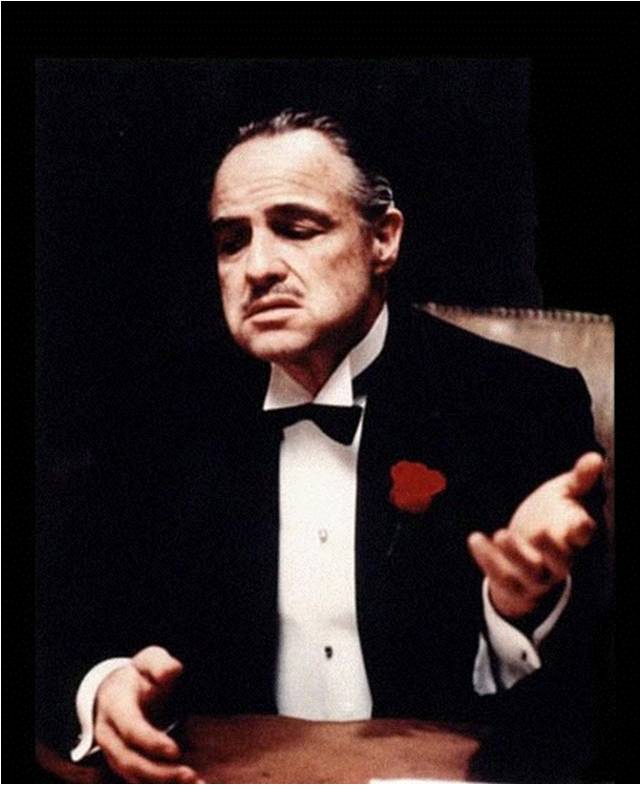
As the Godfather might say “Make sure that you can get rid of people without a mess.”

Enjoy the weekend.