Rosie – Congrats!

Ithaca-based Rosie, on online grocery shopping tool that very smartly helps you buy groceries, won the CenterState CEO Startup Labs Syracuse Program yesterday.  The win was announced at the CenterState CEO annual meeting in Syracuse.  I am delighted with Rosie’s win as it continues Ithaca’s great winning streak for the CenterState CEO competition!

Check out Rosie here.

The force behind Rosie is Nick Nickitas, a first year Johnson (Cornell) MBA student.  Nick is a member of eLab, another Cornell program that rocks.  And Nick has built a hard charging team of Cornell students (ok, and one from Columbia University too) that have literally brought Rosie to life.

Congrats to Nick, Rosie and the team!

Corporate Jets vs. Free Food

I read articles this morning on (i) corporate jets, which to the IRS, me and probably most everyone are rightly deemed taxable compensation if used by executives for non-work purposes, and (ii) free food at Google, Zynga and Twitter (and lots of other tech companies), which to me and probably most everyone are rightly deemed non-taxable FOOD when consumed at work.  Note that I did not put the IRS in that last clause.

Apparently the IRS sometimes takes the view that free food, under the right circumstances, should be taxable compensation to the employee.  I just scratch my head and say “what the burrito!!” (substitute “burrito” with any unsavory word you like).  Sometimes I just truly dislike the tax code.  It is a complicated mess; this is really true for those like me in the VC/PE world (but I am not getting into that now).

Quoting from a Wall Street Journal article (“Silicon Valley’s Mouthwatering Tax Break” April 7, 2013; here is link, but I think it requires a subscription), the “Tax rules around fringe benefits are complex, but in general they categorize meals regularly provided by an employer as a taxable perk, similar to personal use of a company car. That leads several tax experts to wonder if some companies providing free food may be skirting the rules.”  Yet, “Other lawyers point to an exception that allows meals to remain untaxed if they are served for a “noncompensatory” reason for the ‘convenience of the employer.’  The exception generally has been applied to workers in remote locations or in professions where reasonable lunch breaks aren’t feasible. But these lawyers argue that some technology firms could qualify, in part because free food encourages longer work hours and is a crucial part of Silicon Valley’s collaborative culture.”

This debate roasts me.  How about an exception that says “Free food is okay because it helps keep employees motivated and produces a boat load of benefits for society not to mention happy employees that spend money…..after they have paid taxes on their money income”.

When the academics chime in it gets downright funny.  Again, from the WSJ, “I buy my lunch with after-tax dollars,” said Mr. McMahon, the University of Florida professor. “And I have to pay taxes to support free meals for those Google employees.”

Ugggg, yeah, I guess I am feeling sorry for Professor McMahon….NOT.

I am not sure where the line is between corporate jets and free food, but come on….free food….taxable??  Holy Burrito!

Control Freak and Control Freak

I had a mini epiphany tonight regarding control freaks.  I realized clearly that there are two types of control freaks.  If you think there are more, perhaps put your thoughts into the comments.

Type 1:  The control freak who is such because he/she is insecure.  Insecure control freaks need to control things because they (i) delegate poorly and/or (ii) need to take credit for things all the time and/or (iii) are unsure of their own ideas so need to control how they are executed and spin things at every turn to look favorable.  I have found that insecure control freaks talk a lot resulting in long meetings (way too long).

Type 2:  The control freak who is such because he/she is tired of dealing with others messing things up.  This type of control freak also delegates poorly until they have a team that can execute really well.  This type of control freak is not quick to trust co-workers to get stuff done right (even when there is no reason not to trust).  This type of control freak typically does not lack security.  Just the opposite.  They are often overly confident, and this can come across negatively or even a bit arrogant.

The funny thing is that I am not even sure why these thoughts on control freaks popped into my head tonight.  Often my posts result from current work-related events.  Not this one.

I have personally fallen into the Type 2 bucket, even recently.  Good to pull yourself out if you can.  Maybe better to hire a team that enables you to do so.  But, I actually like working with Type 2 control freaks because they are not afraid to make decisions and execute.  And they have little tolerance for poor execution.

Regarding Type 1s, I just like to avoid them.

PSA – So God Made a Venture Capitalist

I just read the lead article from today’s PEHUB Wire.  It is so funny that I had to share in case you did not see it.  Here it is in its entirety.  I can relate to about 85% of this….perfectly.  Gospel for the VC ages.

So God Made a Venture Capitalist!
By Mahendra Ramsinghani

And on the 8th day God looked down on his planned paradise and said, “I need a caretaker for all those entrepreneurs – the crazy ones!” So, God made a venture capitalist (VC)!

I need somebody who can raise funds, come up with a new “unique defensible investment strategy” every three years. Strong enough to convince institutional LPs to part with a billion (or two) with no due-diligence. Yet gentle enough not to squish dreams of MBA students. Somebody who perpetually resides in the top-quartile. Someone who negotiates carry yet never sees a return, fights for attribution, tames cantankerous LP side-letter requests…. Someone who could find a way to survive with just 2% fee-income, be able to feed the family some bread (flown in from France). So, God made a VC!

God said I need somebody to sit and patiently listen to thousands of pitches, even get up before dawn and have conference calls and sit in board meetings all day, make sure those portfolio CEOs are doing fine, eat sushi while driving a Prius. And then go to a demo-day and stay past midnight listening to more pitches, empathizing with entrepreneurs about how hard it is to start a company. So, God made a VC!

God said “I need somebody that can shave their head and hide their grey hair away, wear funny shoes and fit in with an age demographic of their grand-kids. Someone who will finish his forty-hour week by Tuesday noon. Negotiate a $20 million pre-money with a 19-year-old founder CEO. Then, take one more meeting, emerge from a smoke-filled room and put in another seventy-two hours at the worlds largest office hours. So, God made a VC!

God had to have somebody willing to tweet, blog and yet take care of the portfolio CEOs, run at double speed to prevent cash challenges, ahead of the economic downturns and yet stop on mid-field and race to raise another fund when he sees the first smoke from an exit with a positive IRR. So, God made a VC!

It had to be somebody who’d know-it-all-social, mobile, cleantech and greentech or the “internet of things”. Somebody to see beyond the waves, to observe and predict, pretend and challenge…and pontificate and spray and pray. Somebody to do “portfolio value-add” with a straight face, replenish the mojo of a depressed CEO who did not get featured in TechCrunch….and then finish a hard days work with a five mile drive to the home-by-the-sea. Somebody who’d bale a portfolio together with the soft strong bonds of liquidation preferences, who’d laugh and then sigh… and then respond with a soft-whisper “NFW”, when his portfolio CEO says he wants to spend his life “doing what a VC does”. So, God made a VC!

About the author: Mahendra Ramsinghani, a pretend-VC has reinvented himself as a pretend-farmer. He is the author of “The Business of Venture Capital”, and co-author (with Brad Feld) of “Startup Boards”.

Greek Peak – Like a Startup with a Failed Business Model

Most of you know about the huge snow storm that we got in the Northeast this past Friday evening.  In Ithaca, we got only about 6 inches of snow.  At my sister’s house in Amherst, MA, they got over 20 inches.  Our local ski area, Greek Peak, got about 8 inches.  And, luckily, me and my family (wife and 2 kids ages 7 and 11) were skiing during the storm.  We got to the ski area around 3:30pm and left there around 8pm.  It is only about 30 minutes from Ithaca.

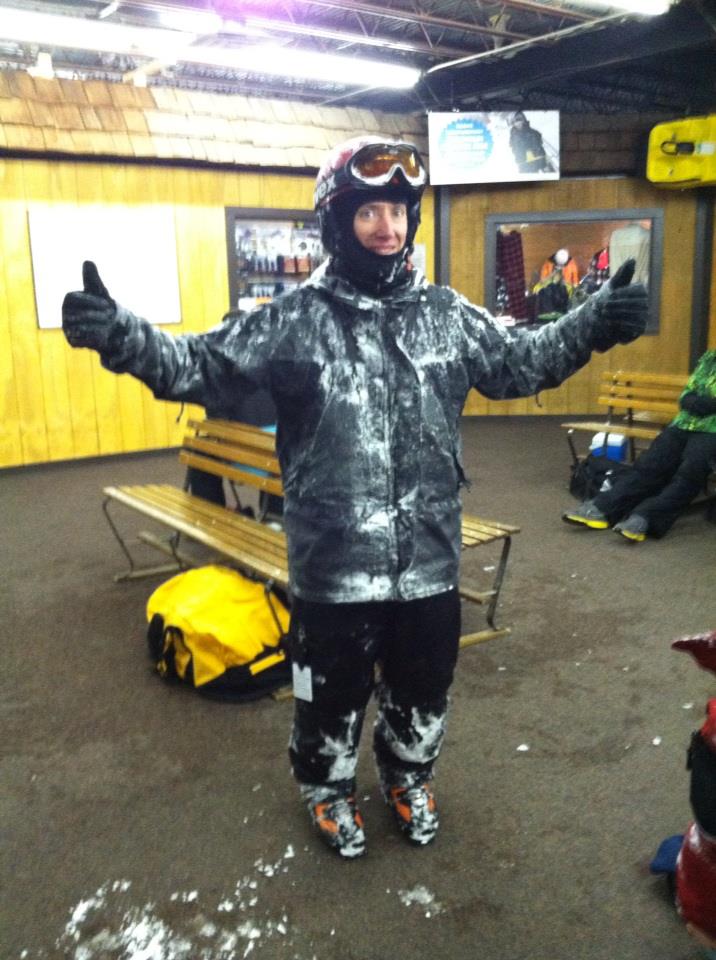
It was actually unbelievable skiing.  I had not been night skiing since middle school.  It was my wife’s first time and same for my kids.  It was warm (for night skiing) – about 28 degrees.  And there was no wind.  Just snow coming down in buckets at the rate of like 1 to 2 inches an hour.  Almost surreal.  It was Epic Powder Skiing.  Here is a funny picture when the night was done:

Epic Power Night

So, what does any of this have to do with startups and business?  Well, Greek Peak filed for bankruptcy last year.  They overbuilt the resort and cannot handle the debt load.  They now have a really nice hotel, indoor water park, adventure rides, zip lines, and a very cool ropes course.

The problem:  the mountain is in the middle of no where and there is not enough “people traffic” to support the amenities.  To me this is a great example of why “build it and they will come” does not work.  Pushing products out into an non-receptive or non-existent market is a risky strategy.  All it produces is a lot of forced hot air being blown out.  Like pushing a rope uphill.  Rarely works.

I am sure that the marketing folks at Greek Peak hired consultants to justify the build out. Perhaps the consultants’ reports were wrong.  I really don’t know.  But I do think a smarter approach would have been a slow build based on real customer demand, followed by critical mass building, followed by more build out, etc.

Sound familiar?  Even some startups have to take a slow and steady build approach.  All depends on the business model.  I hope Greek Peak survives.  As my son said “it would be really sad if the mountain closes down!”.